
Editorial Fisacorp
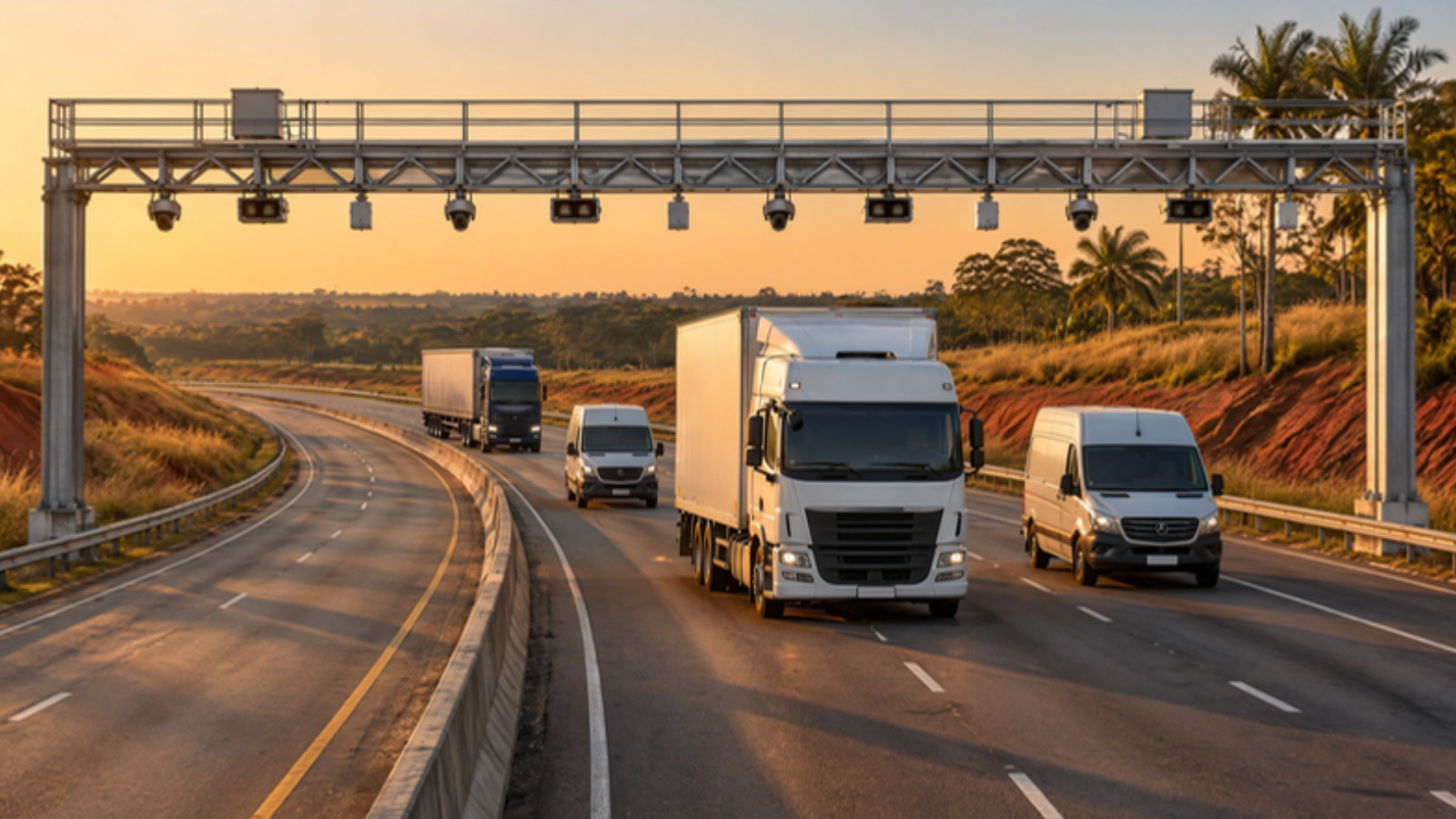
On Monday, November 16, 2026, the transition period for Brazil's free flow electronic tolling ends. Until that date, anyone with unpaid passages can settle the toll with no fine and no points on their driver's license (CNH). From Tuesday (17th), infraction proceedings resume. For companies with vehicles on the road, the practical question is: how do you find out, plate by plate, what is outstanding, and how do you keep it from happening again?
What the rule says
In April, Brazil's National Traffic Council (Contran) approved Deliberation No. 277/2026, which opened a 200-day window to settle overdue tolls. In August, Contran Resolution No. 1,028/2026 ratified the deliberation and detailed its effects, which apply to urban roads and to federal, state, district and municipal highways with free flow. The key points:
- During the period: non-payment does not constitute the infraction under art. 209-A of the Brazilian Traffic Code. No tickets are issued, no notices are sent and no points are assigned.
- Payment within the deadline: paying the toll before the period ends cancels the proceedings linked to that passage, including fines, restrictions and points.
- After the deadline: if the toll is still unpaid, proceedings continue with a ticket, penalty and points. The 30-day deadline to send the infraction notice starts the day after the period ends.
- Fines already paid: you can ask the body that applied the penalty to review it, provided the toll is paid within the period. After that, the resolution does not allow refunds.
- New passages: the general rule becomes 30 days to pay, counted from confirmation that the passage record has been processed.
According to Agência Gov, the deadline set by the government is November 16. Reports published this week by Vrum and TV Sim Brasil confirm the date and mention no extension. Toll evasion on free flow is a serious infraction: R$ 195.23 and five points per ticket.
Why the risk is higher for a fleet
For a company vehicle, the notice goes to the owner, usually the legal entity. Under the Brazilian Traffic Code (art. 257), when the offender is not identified on the spot, there are 30 days from the notice to name the driver. If the company does not do so, in addition to the original fine, a new fine is issued to the corporate owner, equal to twice the original fine.
In practice, one forgotten toll on a route driven every day can turn into several tickets within a few weeks, each requiring the company to identify who was driving the vehicle at that time. The toll itself is usually the smallest part of the problem; the larger cost lies in fines, points for professional drivers and administrative time.
Step by step before Monday
- List the plates that passed through free flow stretches in recent months. Highways cited by the government in April include BR-101, BR-116, BR-381, BR-277, BR-369 and BR-364, in stretches of Rio de Janeiro, São Paulo, Minas Gerais, Paraná and Rondônia. There are also gantries on state highways.
- Check each plate in the CNH do Brasil app, which shows the passage date, the concessionaire and the official payment channel, and on the concessionaires' websites. The app does not take payments: it shows where to pay.
- Pay through official channels and keep the receipt linked to the plate, the date and the concessionaire. Be wary of links received by message and check the address before paying.
- Check passages you do not recognize with the responsible concessionaire before paying for something the fleet did not do.
- If the company has already paid an evasion fine, pay the corresponding toll by November 16 and then ask the issuing body for a review.
A routine for after November 16
Once the transition ends, the 30-day rule applies. This calls for a process, not a one-off push:
- Assign an owner and a fixed checking frequency, for example weekly, so that no passage misses the deadline.
- Review automatic payment tags. A blocked, expired or unfunded tag, or a plate linked incorrectly, are among the common causes of outstanding tolls cited by Vrum.
- Cross-check passages with schedules and routes, so you can quickly tell which driver was in each vehicle if a ticket arrives.
- Organize driver identification with documents and internal deadlines shorter than the 30 legal days.
- Record tolls as an operating cost, alongside fuel and maintenance, so they show up in the analysis of each route.
Limits and exceptions
This content is for guidance only and does not replace the official text or legal advice. Each concessionaire's rules, payment channels and refund procedures may vary by highway and by issuing body. The resolution does not set the date in its own text; it refers to the deadline in Deliberation No. 277, which the government has stated is November 16. If there is an official change, it prevails over this text.
Where fleet management helps
Checking and paying tolls still happens through official channels. What the company can organize is the information that makes this check fast: where each vehicle went and who was at the wheel. EnvFrotas brings together real-time tracking, route analysis, vehicle and driver management and operating cost control, which helps identify which plates need checking and record this expense alongside the fleet's other costs. If it makes sense for your operation, it is worth getting to know the platform and assessing how it fits your team's routine.
References
- Contran Resolution No. 1,028/2026 (Ministry of Transport) — in Portuguese
- Agência Gov, 04/28/2026: suspension of fines and 200-day deadline — in Portuguese
- Vrum, November 2026: deadline to pay without a fine ends on the 16th — in Portuguese
- TV Sim Brasil, 11/11/2026: what changes in free flow from Monday — in Portuguese
- Brazilian Traffic Code, Law No. 9,503/1997 (Planalto) — in Portuguese
Sources consulted on November 14, 2026.